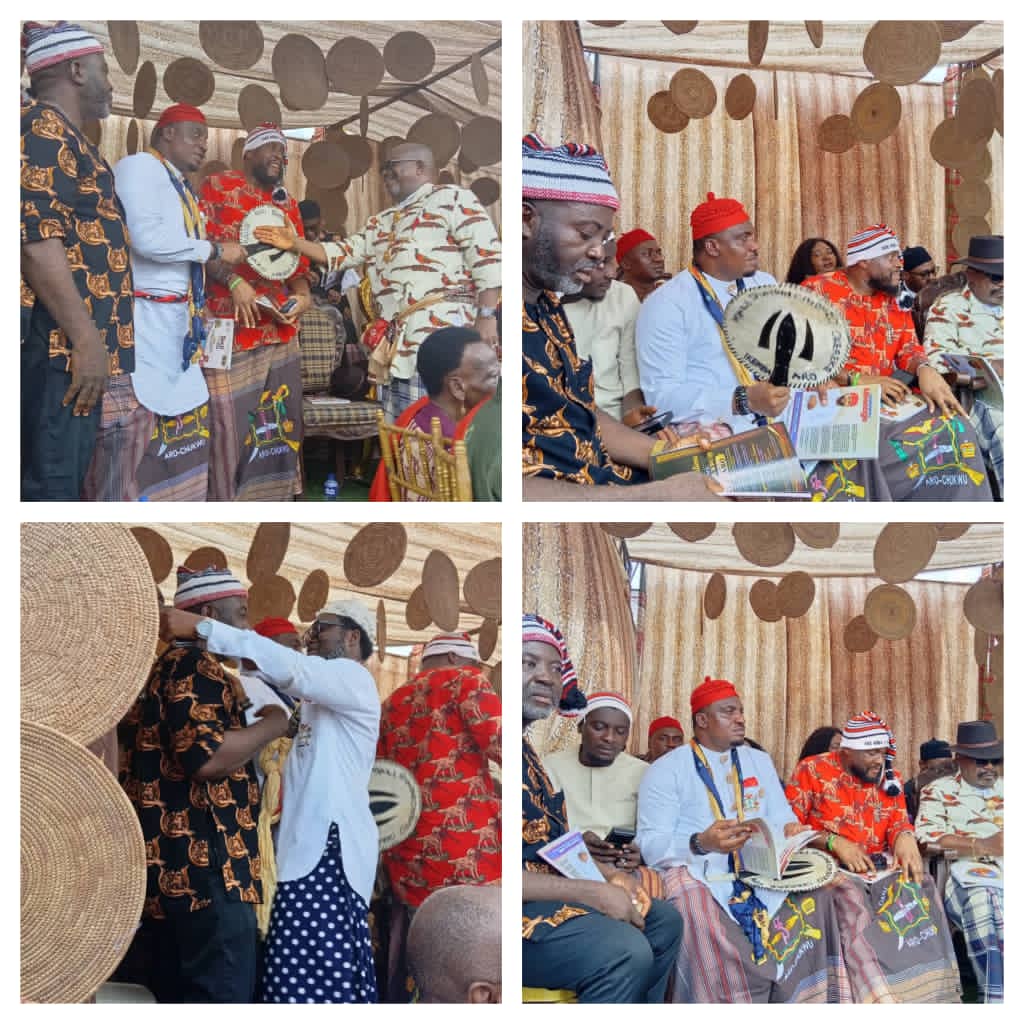
 John Nwaigwe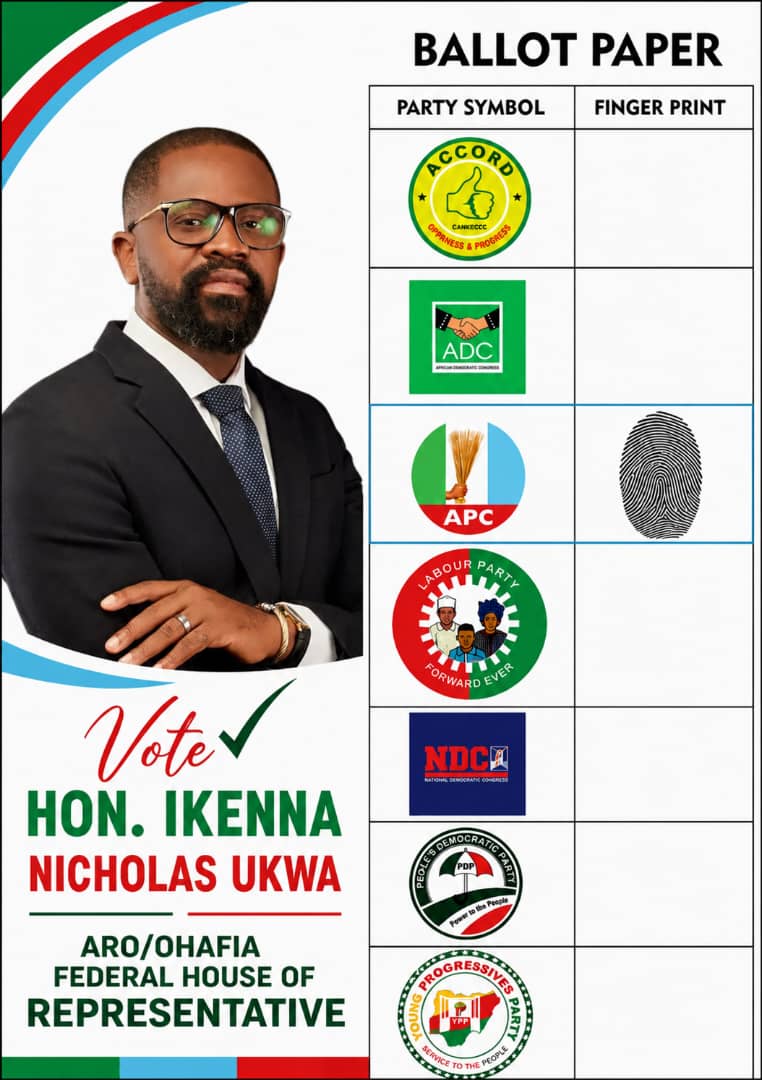
IKENNA NICOLAS UKWA: LET THE RECORD SPEAK
As the 2027 elections approach, the people of Arochukwu/Ohafia Federal Constituency will hear many promises, slogans and political arguments. But beyond the noise, there is one question worth asking:
What has each person seeking to represent the people actually done?
For Ikenna Nicolas Ukwa, the argument being presented is not simply about party affiliation. It is about record, commitment, accessibility and service to the people.
Party affiliation may tell us the political platform a candidate belongs to, but it does not, by itself, tell us what that individual can do for the people. That is why the record of service deserves attention.
And in Ukwa’s case, there is a body of community interventions that can be examined.
A RECORD THAT PREDATES ELECTIVE OFFICE
One of the central points in Ikenna Ukwa’s campaign is that his community interventions began before he sought elective office. His campaign profile states that these activities were undertaken without previously holding an elected political position.
Through the Ikenna & Jenn Ukwa Foundation and other community initiatives, his publicly documented activities cover healthcare, education, community infrastructure, youth development, agriculture and economic empowerment.
That distinction matters because the people are not being asked to judge only what a candidate says he will do. They can also examine what he has already done.
1. LIGHTING UP COMMUNITIES
Among the most visible interventions attributed to Ukwa is the provision of solar-powered streetlights.
His published project record identifies 21+ communities across Arochukwu and Ohafia LGAs as beneficiaries of solar-powered street lighting, including communities in Arochukwu, Ohafia and Nkporo.
The intervention is about more than putting up lights.
For communities that experience darkness on roads and streets at night, lighting can improve visibility, make movement easier and create a more active environment after sunset. It can also support evening commercial and community activities.
This is why an infrastructure intervention that may appear simple can have a practical effect on everyday life.
2. BRINGING HEALTHCARE CLOSER TO THE PEOPLE
Healthcare is another major part of the record.
The Ikenna & Jenn Ukwa Foundation says its medical outreaches provide services including physician consultations, vital-sign checks, blood-pressure and blood-sugar screening, eye tests, free eyeglasses, medication and health counselling.
These outreaches have been reported in communities including Okagwe, Akanu, Ebem, Elu and Amaekpu, A 2026 report also documented plans for a medical and eye-care outreach in Nkporo.
Why does this matter?
Because healthcare is not only about hospitals. It is also about access.
For an elderly person who needs an eye examination, a parent who cannot easily afford basic medical checks, or a family facing the cost of medication, bringing healthcare services directly into the community can remove some of the barriers to getting help.
3. INVESTING IN EDUCATION AND YOUNG PEOPLE
The record also includes educational interventions.
The published project record identifies scholarships and education grants, support for indigent students, free WAEC and NECO registration, and the distribution of customised exercise books and textbooks to schools. It also lists a modern girls’ hostel project at Federal Government College, Ohafia.
A 2025 Vanguard report separately referenced educational support, including the distribution of academic materials and payment of NECO fees for indigent students.
The importance of this is straightforward.
Education is an investment in the future of the constituency.
When a student receives learning materials, examination support or assistance with school-related costs, the immediate benefit may go to one child, but the long-term value can extend to a family and eventually to the wider community.
The argument, therefore, is not simply about giving people things. It is about creating opportunities for young people to learn, develop and build a future.
4. EMPOWERMENT AND LIVELIHOOD SUPPORT
Another area highlighted in Ukwa’s record is economic empowerment.
His published project record lists the distribution of sewing machines, motorcycles, hair-clipping kits, hairdressing equipment, industrial blenders and other start-up items to people seeking to build or strengthen livelihoods.
The purpose of interventions like these is different from simply providing temporary assistance.
A productive asset can potentially help a beneficiary earn an income, support a family and become economically active.
That is particularly relevant to young people, women, artisans and small-scale entrepreneurs who may have the skills or willingness to work but lack the basic equipment required to start.
5. SUPPORT FOR FARMERS AND RURAL COMMUNITIES
The record also includes agricultural support, particularly fertilizer distribution to farming communities in areas including Amuru Abam, Ihechiowa, Amuma Ohafia, Ibina Ohafia and Elu Ohafia.
For farming communities, agricultural inputs are directly connected to productivity and household livelihoods.
Supporting farmers is therefore not simply about agriculture as an economic sector. It can affect food production, household income and the ability of rural families to sustain themselves.
6. YOUTH DEVELOPMENT THROUGH SPORTS
The record further identifies football competitions involving communities in Ohafia.
The stated objective is not merely entertainment. The project is presented as a way of promoting youth participation, unity, sports culture and interaction between communities.
Sports can provide young people with an avenue to develop talent, build friendships and interact beyond the boundaries of their individual villages.
In a constituency made up of many communities, anything that encourages young people to meet, compete and cooperate can also contribute to stronger community relationships.
7. COMMUNITY SUPPORT AND HUMANITARIAN INTERVENTIONS
Beyond the larger projects, the published record includes food and palliative support, assistance to vulnerable people, support for indigent patients and other humanitarian interventions.
These interventions address immediate needs.
They may not solve every structural problem facing the constituency, but for someone dealing with a hospital bill, struggling with food or unable to afford basic educational requirements, immediate support can make a real difference.
WHY THE RECORD MATTERS
This is where the conversation should become bigger than political party colours.
A political party is a vehicle through which candidates contest elections. But the person who eventually occupies a public office is the individual who will be expected to represent constituents, engage institutions, pursue projects and respond to the needs of the people.
Therefore, voters have every reason to examine the individual behind the party label.
What has he done?
Where has he served?
Has he been accessible?
Has he demonstrated commitment to communities?
Has he invested in people?
Has he supported education, healthcare, infrastructure and economic opportunities?
And most importantly:
Is there evidence of what he is presenting to the people?
In the case of Ikenna Nicolas Ukwa, his campaign is placing these documented interventions before the public for examination. His published record covers solar lighting, healthcare outreaches, education, scholarships, school materials, agricultural support, youth development, empowerment and humanitarian assistance.
That does not mean voters should stop asking questions. It means the record should be part of the conversation.
NOT JUST ABOUT WHAT HE PROMISES TO DO
There is a significant difference between saying: “If elected, I will do this.”And being able to say: “Before asking for this office, here is what I have already done.”
That is the basis of the argument being made for Ikenna Nicolas Ukwa.
His supporters are not asking the people to look only at the APC logo. They are asking them to look at the individual, examine his record, consider his capacity and compare his plans with the needs of the constituency.
Ultimately, the people of Arochukwu/Ohafia will make their own decision.
But that decision can be informed by more than campaign promises.
It can be informed by evidence, experience, record and vision.
LET THE RECORD SPEAK.
For Arochukwu/Ohafia, the conversation should be about the kind of representation the people want and the qualities they expect from the person who will represent them.
Party matters. But the person matters too.Promises matter. But performance matters too.
Ambition matters. But a record of service deserves to be examined.
And that is the message behind Ikenna Nicolas Ukwa’s campaign:
LOOK BEYOND THE PARTY COLOUR.
EXAMINE THE RECORD.
ASK THE QUESTIONS.
LET THE PEOPLE DECIDE.
Ikenna Nicolas Ukwa:Let the record speak for itself.
#IkennaNicolasUkwa
#ArochukwuOhafia
#LetTheRecordSpeak
#VoteCapacity
#CommunityFirst
(C)Ikenna ukwa media