 John Nwaigwe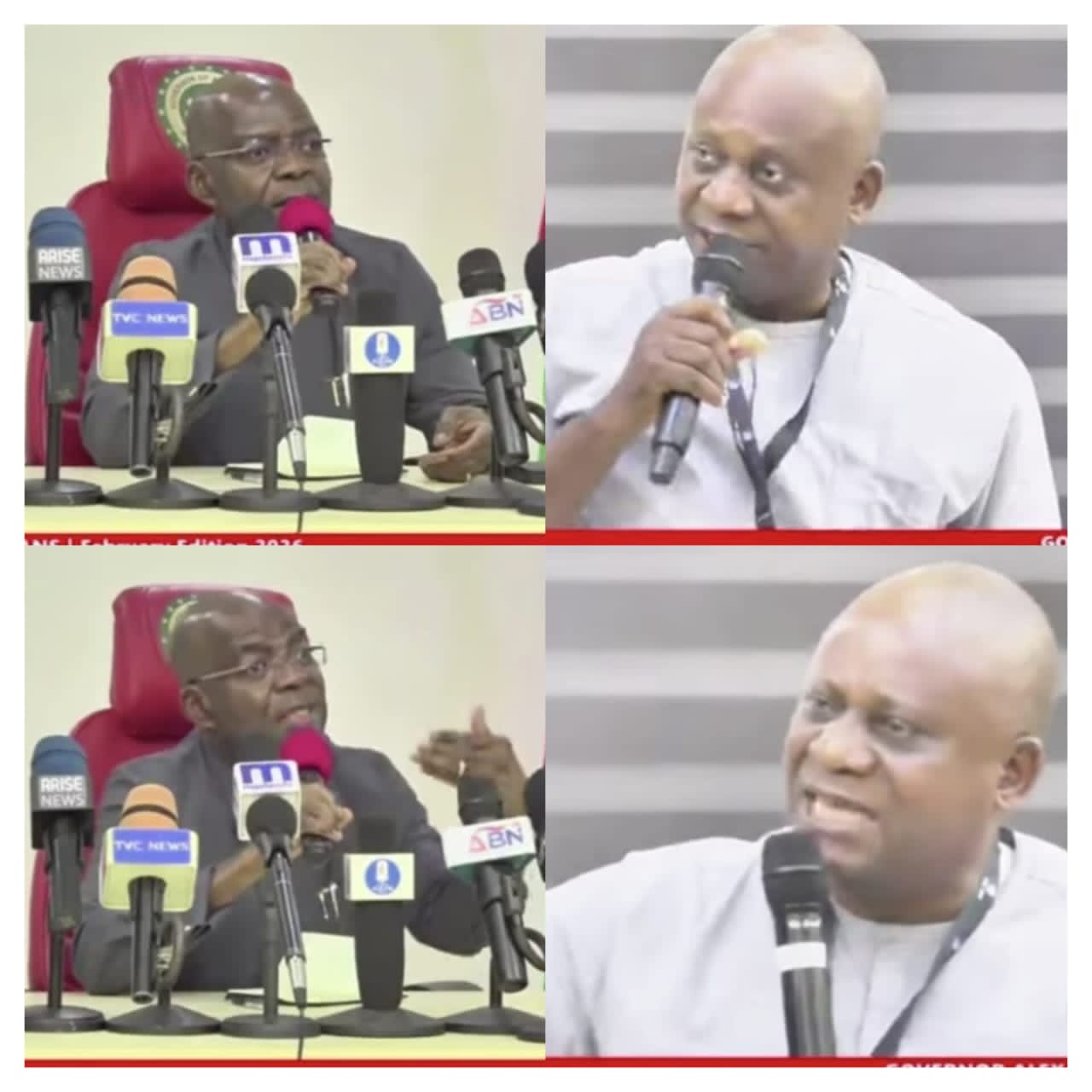
Media Divergence Is Normal, Says Chukwuma Okezie as He Defends Governor Otti’s Media Chat
Chukwuma Okezie has expressed concern over what he described as misleading narratives circulating online following the recent media chat of Governor Alex Otti. According to him, what transpired during the session was a routine professional exchange that has been distorted to suggest conflict and hostility.
Reacting to the development, Okezie maintained that moments of divergence during media interactions are normal and reflective of a healthy democratic process. He stressed that challenging questions on professional or methodological grounds does not amount to hostility, but rather demonstrates the vibrancy of open governance and freedom of expression.
The controversy arose during the Governor’s monthly media engagement, “Governor Otti Speaks to Abians,” a platform designed to promote transparency, accountability, and direct communication with citizens. During the session, a correspondent from Don FM, while acknowledging visible transformations across the state, requested data on the measurable impact of ongoing projects.
Governor Otti challenged the premise of the question, emphasizing that the responsibility for gathering and verifying impact data lies primarily with journalists and independent research institutions, not with the government implementing the projects. Okezie noted that the Governor’s position was grounded in professional ethics and respect for the boundaries between governance and objective reporting.
He explained that while government provides access to information, outlines policies, and implements projects, independent verification and analytical assessment of impact are core functions of the media and other evaluative bodies. He warned that expecting a government to generate and validate its own performance metrics could blur the lines between governance and independent oversight.
Okezie further described as unfortunate attempts by some opposition elements to politicize what he called an ordinary professional divergence. He stated that disagreements during media engagements do not equate to disrespect and are common in democratic societies where leaders may question the framing or methodology of certain inquiries.
Reaffirming his position, Okezie highlighted Governor Otti’s record as one of Nigeria’s most media-accessible leaders. Since assuming office, the Governor has institutionalized the monthly media chat as a mechanism for accountability and consistent public engagement. Okezie also referenced the Governor’s background as a respected writer and columnist, noting that his longstanding relationship with the media underscores his appreciation for the Fourth Estate.
He emphasized that the media engagement sessions are intentionally robust and unscripted, with professionalism and objectivity expected from all participants. Questions that deepen public understanding and enhance accountability, he said, are always welcome, while independent data gathering and impact assessment remain the responsibility of journalists and credible evaluators.
Okezie urged Abians to focus on the broader picture of ongoing reforms and measurable progress across critical sectors in the state, rather than being distracted by what he described as a routine exchange taken out of context. He reiterated that open platforms for meaningful public and media interaction remain vital to strengthening democratic governance.
He also commended journalists in Abia State for their diligence and professionalism, describing their partnership as indispensable to the collective effort to rebuild, reposition, and sustainably transform the state.